FACTORY LITHIUM VS AFTERMARKET OR IMPORTED KITS - A MUST READ...
Why Factory Lithium Golf Cart Batteries Are the Safer Choice
At Viers Golf Cars, we spend a lot of time helping customers sort through the claims surrounding lithium golf cart batteries. One of the biggest misconceptions we hear is that all lithium battery systems are basically the same. They are not.
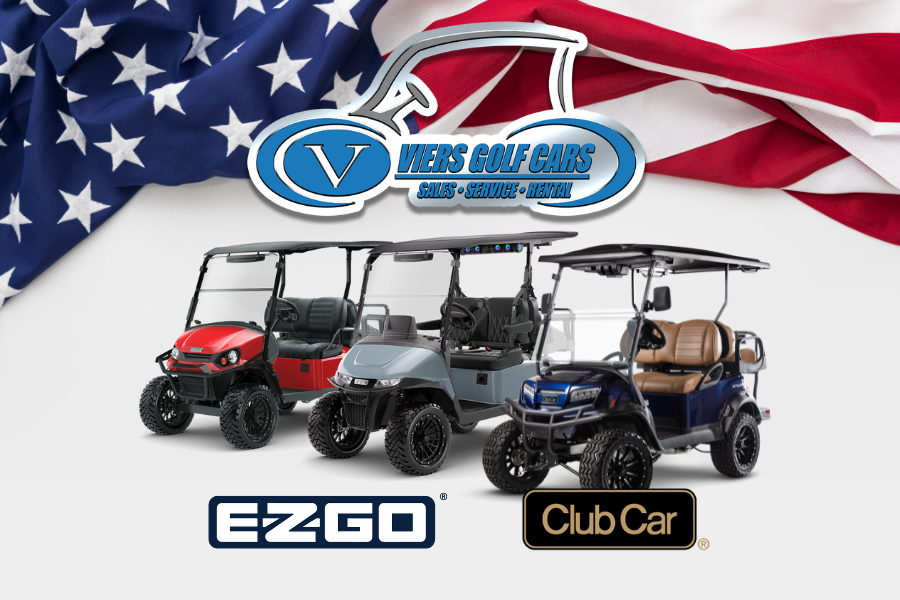
There is a major difference between a factory-engineered lithium golf cart from Club Car or E-Z-GO and a low-cost aftermarket battery kit or price-driven imported lithium cart. A true OEM lithium cart is not just a standard cart with a lithium battery added later. It is a complete vehicle system designed around lithium power from the beginning. Both Club Car and E-Z-GO offer factory lithium platforms with smart charging, real battery management, battery monitoring, premium supplier-backed battery technology, and maintenance-free ownership. Club Car uses Vanguard battery technology, while E-Z-GO uses Samsung SDI technology.
Factory Lithium Systems Are Different by Design
What separates factory lithium from many aftermarket conversions is system-level engineering. In a factory lithium cart, the battery, charger, controller, wiring, software logic, and protective electronics are designed to work together as one complete system. That matters because lithium safety is not just about the chemistry inside the battery. It also depends on how the pack is charged, how heat is managed, how the Battery Management System responds, and whether the full vehicle was designed around that battery platform in the first place.
That is why factory lithium vehicles from Club Car and E-Z-GO stand apart. Both brands offer integrated lithium systems designed to manage charging, monitor battery condition, and support long-term reliability in a way that many aftermarket conversions simply do not.
Why Club Car and E-Z-GO Stand Apart
Club Car and E-Z-GO stand apart for the same core reasons: premium battery partners, factory integration, real battery management, smart charging, active monitoring, and maintenance-free ownership.
Club Car's Vanguard and E-Z-GO's Samsung may have may have different supplier names, but they share the same core advantage: both brands are backed by established battery partners instead of anonymous gray-market sourcing. Both brands also offer maintenance-free lithium ownership, which is a major advantage over traditional lead-acid setups that require watering, cleaning, and more routine attention.
Just as important, both manufacturers build lithium vehicles as complete systems, not as improvised conversions. That means the battery, charger, electronics, and vehicle controls are engineered to work together from the start. For a customer, that translates into better compatibility, better support, and more confidence in long-term performance.
Another major advantage of buying a factory lithium cart from Club Car or E-Z-GO through an established dealer is the reassurance that both the manufacturer and the dealer network are there when you need them. E-Z-GO has been building golf cars since 1954, and Club Car since 1958. That kind of history matters because it speaks to long-term product support, parts availability, and brand accountability. By comparison, many big-box retailers and online sellers offering low-cost imported carts are not built around long-term golf cart service, diagnostics, and parts support after the sale. When you buy from an authorized dealer, you are not just buying a cart. You are buying access to a support network designed to be there for the long haul.
What Actually Causes Lithium Battery Fires?
This is one of the most important parts of the conversation because consumers hear the phrase lithium fire and often assume lithium batteries are inherently dangerous. That is not the right takeaway.
Lithium battery fires are tied to failure conditions, not normal operation. Those failure conditions can include internal short circuits, overheating, physical damage, poor pack construction, improper charging, weak thermal management, low-quality cells, or missing protective systems. In plain language, lithium batteries do not catch fire simply because they are lithium. The bigger risk is poor engineering, poor manufacturing, poor protection, or poor component matching.
That is exactly why tested battery systems, matched chargers, real battery management, and built-in safety controls matter so much. A well-engineered factory lithium system is designed to reduce those risks. A questionable battery pack with unclear origins and limited documentation raises far more concern.
Why Cheap Aftermarket Batteries and Imported Carts Deserve Caution
This is where the gray market becomes a serious issue. Many low-cost aftermarket lithium battery kits and imported lithium carts compete aggressively on price, but price alone tells you very little about the quality and safety of what you are buying. The real questions are who built the pack, where the cells came from, whether the charger was properly matched, whether the Battery Management System provides real protection, whether the product has legitimate testing and documentation behind it, and whether parts and support will still be available down the road.
A marketplace listing on Amazon, Temu, or another online platform may show an attractive price and impressive claims, but it does not automatically tell a buyer anything meaningful about cell quality, pack construction, BMS sophistication, transport-testing documentation, or long-term support. That is exactly why factory lithium systems from Club Car and E-Z-GO remain in a different category than many aftermarket battery kits and gray-market imported carts.
By comparison, many lower-cost aftermarket and imported alternatives leave buyers with unanswered questions about sourcing, compliance, charger compatibility, serviceability, and accountability after the sale.
Why UL 2271 and UN 38.3 Matter
When we talk with customers about lithium battery safety, two of the most important standards to understand are UL 2271 and UN 38.3.
UL 2271 matters because it is a key safety standard for batteries used in light electric vehicle applications. It helps distinguish a battery system built to recognized safety expectations from one that is simply being sold with a long list of marketing claims.
UN 38.3 matters for a different reason. It relates to transport testing for lithium cells and batteries. Under U.S. Department of Transportation regulations, lithium batteries must pass UN 38.3 transport testing and have test-summary documentation that helps verify traceability in the supply chain.
That does not mean UN 38.3 alone makes a battery a premium golf cart battery. It means the design has passed required transport testing. The stronger position for any buyer is when a battery system combines documented transport compliance, recognized safety evaluation, real battery management, matched charging, and manufacturer-backed engineering.
The Smarter Long-Term Choice
The difference between a factory lithium golf cart and a cheap online battery kit or price-driven imported alternative comes down to more than price. It comes down to engineering, safety systems, supplier quality, documentation, and long-term support.
That is why factory lithium systems from Club Car and E-Z-GO continue to stand apart. In the lithium world, the cheapest option is not usually the smartest one.
When you shop for a lithium golf cart, do not stop at the battery’s advertised capacity or the lowest price. Ask better questions. Ask about the Battery Management System. Ask about charger compatibility. Ask about UL 2271. Ask about UN 38.3 documentation. Ask who stands behind the product after the sale.
When safety, long-term reliability, and peace of mind matter, a factory-built lithium golf cart from Club Car or E-Z-GO is the better choice.


Leave a comment